
Hernia in Seremban: Warning Signs and Treatment Options
A hernia occurs when tissue or part of an organ pushes through a weak area in the surrounding muscle or connective tissue. An inguinal hernia appears in the groin and may become more noticeable while standing, coughing or lifting.
Some hernias cause little discomfort. Others become painful, enlarge or trap bowel. Patients seeking hernia treatment in Seremban should know which symptoms can wait for a planned consultation and which require emergency care.

Key Takeaways
| Key Point | Summary |
|---|---|
| What is an inguinal hernia? | Abdominal contents bulge through a weak area in the lower abdominal wall or groin. |
| Does every hernia hurt? | No. Some are painless; others cause aching, heaviness, burning or discomfort. |
| When is a hernia an emergency? | Sudden severe pain, vomiting, fever, redness or a bulge that no longer returns may indicate obstruction or strangulation. |
| What are the repair options? | Open and laparoscopic repairs are available; the suitable method depends on the patient and hernia. |
| Which pillar should this support? | Link to CMH’s general and specialised surgery service. |
Common Types of Hernia
Inguinal hernia
This develops in the groin and is more common in men. It may contain fat or part of the small intestine.
Femoral hernia
This appears lower in the groin and can carry a higher risk of trapping tissue. It requires medical assessment.
Umbilical hernia
This occurs around the navel. Adult umbilical hernias may be associated with weakness and increased abdominal pressure.
Incisional hernia
This forms at or near a previous surgical incision when the abdominal wall remains weak.
Symptoms of an Inguinal Hernia
The NIDDK inguinal-hernia guide lists a groin or scrotal bulge, discomfort, pain, heaviness or burning. Symptoms may worsen with lifting, coughing, straining or prolonged standing and improve when lying down.
Not every groin lump is a hernia. Enlarged lymph nodes, cysts, vascular problems and other conditions can appear similar. Diagnosis should be confirmed clinically.
Emergency Warning Signs
A hernia can become incarcerated, meaning it is stuck outside the abdominal wall. Strangulation occurs when blood supply is cut off and is life-threatening.
Seek emergency help for:
- A bulge that suddenly becomes larger or cannot return inside;
- Sudden severe tenderness or pain;
- Redness or dark colour over the bulge;
- Fever;
- Abdominal swelling;
- Persistent nausea or vomiting; or
- Inability to pass stool or gas with worsening pain.
Use CMH’s 24-hour Accident and Emergency department for urgent symptoms.
How a Hernia Is Diagnosed
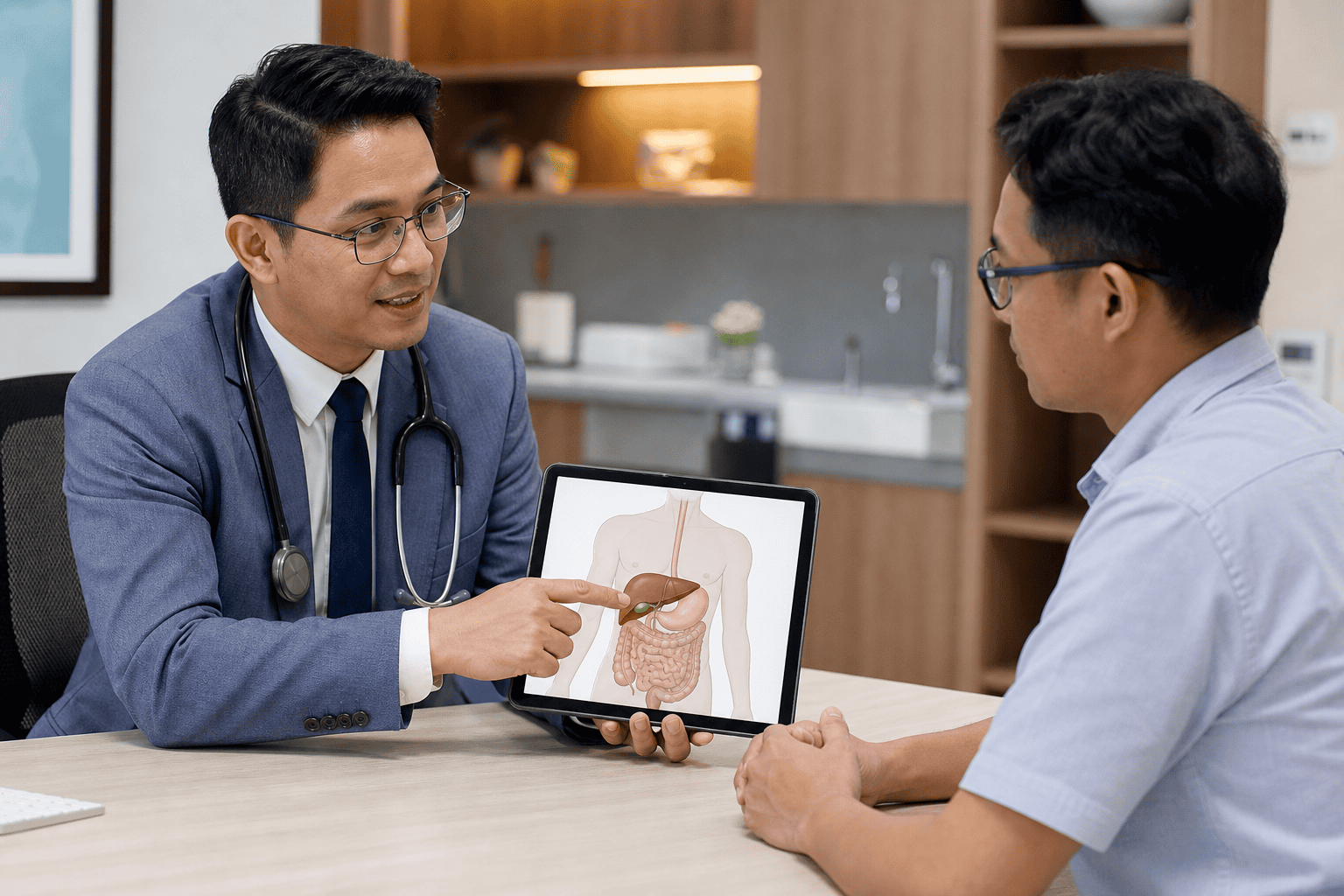
The surgeon asks when the bulge appears, whether it reduces when lying down, what triggers discomfort and whether bowel symptoms are present. During examination, the patient may be asked to stand, cough or strain.
Ultrasound, CT or MRI may be used when examination is unclear, the anatomy is complex or a complication is suspected. Imaging is not required for every straightforward hernia.
Does Every Hernia Need Immediate Surgery?
Not every hernia is repaired immediately. Selected men with small inguinal hernias that cause few or no symptoms may be monitored through watchful waiting. This requires understanding warning signs and attending follow-up.
The NIDDK notes that many men who delay surgery eventually develop new or worsening symptoms. Women, femoral hernias and patients with significant symptoms may be managed differently because risks vary.
Open Hernia Repair
Open repair uses one incision over the groin. The surgeon returns the tissue to the abdomen and strengthens the weak area, often with mesh. Anaesthesia choice depends on the procedure and patient.
Laparoscopic Hernia Repair
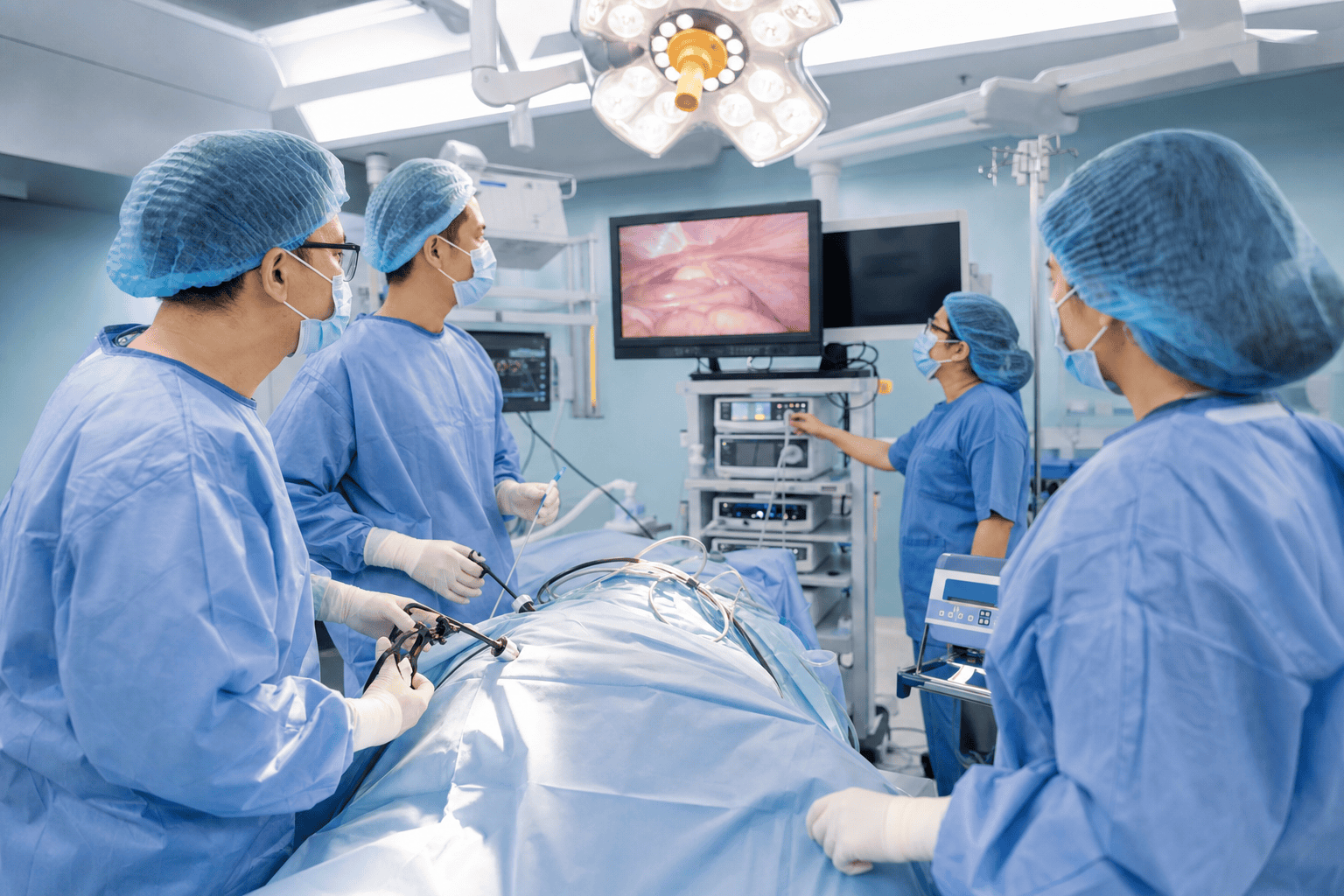
Laparoscopic repair uses several small incisions, a camera and specialised instruments. It is generally performed under general anaesthesia. Recovery may be faster for selected patients, but not every hernia is best treated this way.
The decision considers hernia size, side, recurrence, previous surgery, medical conditions, anaesthesia risk and surgeon assessment.
Preparing for Surgical Consultation
Bring a medication list and details of previous abdominal operations. Tell the surgeon about blood thinners, heart or lung disease, diabetes, smoking, allergies and previous anaesthesia problems.
Do not stop prescribed medication without instructions. The team will explain fasting, admission, pain management, wound care and activity restrictions if surgery is planned.
Recovery After Hernia Repair
Mild discomfort and swelling can occur. Patients receive guidance on walking, lifting, work and exercise. Contact the team for fever, worsening redness, drainage, persistent vomiting, breathing problems, difficulty urinating or severe increasing pain.
Recurrence and chronic pain are possible even after technically successful repair, although serious complications are uncommon. Follow-up supports safe recovery.
Frequently Asked Questions
Can exercise cause a hernia?
Hernias develop through weakness and pressure. Heavy straining may reveal or worsen one but is not always the sole cause.
Can a hernia heal without surgery?
Adult abdominal-wall hernias generally do not close permanently on their own. Symptoms may remain stable for a time.
Should I wear a hernia belt?
A belt does not repair the defect and may be unsuitable. Use one only if advised by a clinician.
Is mesh always used?
Mesh is common but not universal. The surgeon chooses the technique based on the hernia and patient.
How soon can I return to work?
It depends on the operation, discomfort and physical demands. Follow the surgeon’s specific advice.
Can a hernia return?
Yes. Recurrence is possible. Smoking, wound problems, tissue quality and other factors can influence risk.
Conclusion
A groin bulge or discomfort should be assessed to confirm whether it is a hernia. Sudden severe pain, vomiting, fever or a trapped bulge requires emergency care. Open and laparoscopic repairs are available, but the best approach depends on individual risk and anatomy. CMH Specialist Hospital provides general surgery, imaging and emergency care in Seremban.
This article provides general information and does not replace personal medical advice.

