Suspected Fracture in Seremban: Emergency Care or Orthopaedic Appointment?
A fracture is a broken bone. Some fractures are obvious because a limb looks deformed or an open wound is present. Others resemble a severe sprain and can only be confirmed after examination and imaging. Knowing where to seek care can prevent additional damage and delay.
For a suspected fracture in Seremban, major trauma and emergency warning signs should go directly to Accident and Emergency. Orthopaedic follow-up is important after initial stabilisation to monitor healing and decide whether casting, bracing, rehabilitation or surgery is required.

Key Takeaways
| Key Point | Summary |
|---|---|
| Can you always recognise a fracture? | No. A fracture may look similar to a sprain, especially without obvious deformity. |
| What should you do immediately? | Keep the injured area still, control severe bleeding and seek medical assessment. |
| When is an ambulance appropriate? | Major trauma, severe pain, suspected spine injury, obvious leg fracture or circulation problems may require ambulance care. |
| What happens after emergency treatment? | Orthopaedic review may confirm the plan, monitor alignment and guide rehabilitation. |
| Which pages should this support? | Link to CMH’s orthopaedic service and 24-hour emergency department. |
Signs of a Possible Broken Bone
Symptoms can include severe local pain, rapid swelling, bruising, tenderness, inability to use the limb, abnormal movement, shortening or deformity. A crack or grinding sensation may occur, but absence of a sound does not rule out fracture.
Children, older adults and people with osteoporosis may fracture a bone after relatively modest trauma. Stress fractures can develop gradually from repeated loading rather than one accident.
Emergency Warning Signs
Call emergency services or go to Accident and Emergency when:
- A bone is visible or an open wound lies over the suspected fracture;
- The limb is deformed;
- The hand or foot is cold, pale, blue or numb;
- Bleeding is heavy;
- The person is unconscious or has breathing problems;
- A neck, back, pelvis or major leg fracture is suspected;
- Pain is severe and safe transport is not possible; or
- The injury followed a road collision, fall from height or major crush.
The NHS first-aid guide advises treating an uncertain injury as a fracture and keeping it as still as possible while arranging safe transport.
What Not to Do
Do not force a deformed limb straight, push exposed bone back, repeatedly test movement or give food and drink when surgery or anaesthesia might be needed. Avoid tight improvised splints that impair circulation.
If trained help is available, support the limb in the position found and monitor circulation. Control severe bleeding with appropriate pressure around the injury while avoiding direct pressure on exposed bone.
What Happens in Emergency Care
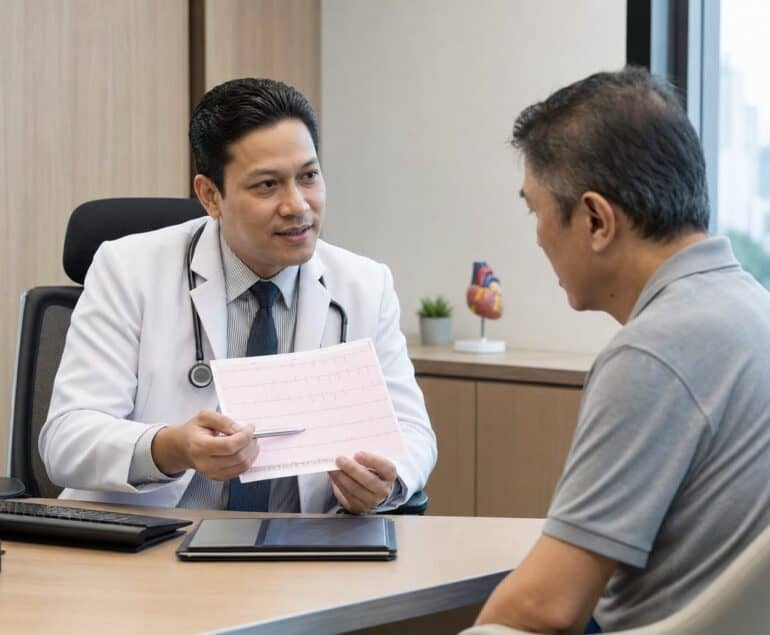
The team assesses the mechanism of injury, circulation, sensation, movement, skin and nearby joints. Pain relief and temporary immobilisation may be provided. X-rays are commonly used; CT may be required for complex fractures or particular anatomical areas. Patients who require further assessment or treatment may also be referred to an orthopedic specialist in Seremban for appropriate specialist care.
CMH’s emergency department operates 24 hours and has access to imaging services, laboratory and pharmacy support.

Does Every Fracture Need Surgery?
No. Stable, well-aligned fractures may heal in a cast, splint or brace. Surgery is more likely when a fracture is open, displaced, unstable, affects a joint surface, threatens circulation or cannot maintain acceptable alignment without fixation.
The operation may use plates, screws, nails, wires or other devices. The choice depends on location, fracture pattern, age, bone quality and patient health.
Why Orthopaedic Follow-Up Matters
After emergency treatment, specialist review confirms whether alignment is satisfactory and whether the bone is healing as expected. Swelling changes, so casts or splints sometimes require adjustment. Repeat imaging may be needed.
Fracture clinics also monitor skin, circulation, nerve function and signs of infection. University College London Hospitals describes fracture-clinic care as follow-up for broken bones, wound care, casting and orthotics.
Recovery and Rehabilitation
Healing time varies by bone, fracture type, age, smoking, diabetes, nutrition and treatment. Pain improvement does not always mean the bone has regained full strength.
After immobilisation, stiffness and muscle weakness are common. Rehabilitation may restore movement, strength and function progressively. Return to driving, lifting or sport should follow medical advice.

Cast and Splint Safety
Keep the cast or splint dry unless specifically designed otherwise. Do not insert objects to scratch the skin. Seek urgent review if pain or swelling rapidly worsens, fingers or toes become numb or discoloured, the cast feels dangerously tight, a bad smell or discharge develops, or fever occurs.
Elevation may help early swelling when advised. Move unaffected joints and fingers or toes if your clinician permits.
Frequently Asked Questions
Can I have a fracture and still walk?
Yes. Some stable or stress fractures still allow limited walking. Weight-bearing ability does not exclude a break.
Is bruising proof of a fracture?
No. Sprains and contusions also bruise. Examination and imaging may be needed.
Do all fractures show on the first X-ray?
Not always. Some small or stress fractures become clearer later or need MRI or CT.
How long does a fracture take to heal?
It varies widely. The treating team will estimate based on the specific bone and injury.
When can I drive after a fracture?
Only when you can safely control the vehicle, are not impaired by medication and have medical clearance where appropriate.
Should I take calcium supplements?
Do not assume supplements are required. Discuss diet, vitamin D, bone health and medications with a clinician.
Conclusion
Suspected fractures need prompt assessment when there is major trauma, deformity, open injury or circulation change. Emergency care stabilises the injury; orthopaedic follow-up guides definitive treatment and recovery. CMH Specialist Hospital provides 24-hour emergency, imaging and orthopaedic services in Seremban.
This article provides general information and does not replace personal medical advice.